Understanding Complete Guide to Booking and Riding KTX Trains for Foreigners
The KTX is basically the silver bullet of South Korea that makes the entire peninsula feel like one giant, interconnected city. First time I went, it’s a high-speed rail system where you can zip from the neon lights of Seoul down to the salty air of Busan in just about 2.5 to 3 hours. Honestly, it’s the only way to travel if you value your time and sanity. Budget about $20-30 for the experience.
The Network and Service Types
When I first visited, I was a bit overwhelmed by the different train types. You’ve got the standard KTX, the newer and sleeker KTX-Eum, and then the slightly slower ones like ITX-Saemaeul. The “Eum” is my personal favorite because it has wireless charging pads at every seat, which is a lifesaver when your phone is dying after a morning of sightseeing. The main line most foreigners use is the Gyeongbu Line, which connects Seoul to Busan, but don’t overlook the Honam Line going toward Gwangju or the Gangneung Line for the east coast.
- KTX-Sancheon: The “shining” blue trains with more legroom.
- KTX-Eum: Modern, electric-powered, and very quiet.
- ITX/Mugunghwa: These aren’t high-speed, but they’re cheap if you’re not in a rush.
- SRT: This is a separate high-speed company that mostly leaves from Suseo Station in southeast Seoul.
Why Integration Matters
The thing about the KTX is how well it plays with the rest of the country’s transport. You can take the subway directly into Seoul Station or Yongsan Station, hop on a train, and then find a line of taxis or buses waiting for you at your destination. I still remember arriving in Daegu around 8 PM; the transition from the train platform to the local subway was so seamless I didn’t even have time to get confused. Most stations have clear English signage, though sometimes the translations are a bit… well, creative.
- High-speed lines cover all major provinces.
- Stations are usually located in city centers (mostly).
- The “KORAIL Pass” is a special option for foreigners that can save a ton of money.
Coverage and Reach
The coverage is impressive, though it’s worth noting that the KTX doesn’t go literally everywhere. For the deep mountains or tiny fishing villages, you’ll eventually need a bus. But for 90% of the spots a traveler wants to see, the KTX gets you within a short cab ride. Sol-jik-hi (솔직히), I was surprised how small the country felt once I realized I could do a day trip from Seoul to Jeonju for bibimbap and be back by dinner. It makes you realize that you don’t have to stay stuck in the capital the whole time.
The importance of Complete Guide to Booking and Riding KTX Trains for Foreigners
Reliability is the core reason why everyone in Korea relies on this system. If the ticket says the train leaves at 14:02, you can bet your last won that the doors are closing at 14:01:50. It’s a level of punctuality that honestly makes me a little anxious when I’m running five minutes late with a heavy suitcase. You’ll notice the smell of incense as you enter. Look for the big sign near the corner.
Efficiency vs. The Alternatives
I’ve tried taking the “Express Bus” to save money, and while it’s okay, the KTX is just better. On a bus, you’re at the mercy of the weekend traffic on the Gyeongbu Expressway, which can be a nightmare. On the train, you have a smooth ride, a table for your laptop, and no motion sickness. I once spent five hours on a bus from Gyeongju to Seoul because of a holiday jam; never again. The KTX does that same trip in two hours flat.
- Speed: Reaches up to 305 km/h.
- Comfort: Way more legroom than a plane’s economy class.
- Amenities: Clean bathrooms, vending machines, and power outlets.
- Views: You get to see the rural rice paddies and mountains through the big windows.
The Environmental and Social Impact
Korea is big on “green” initiatives lately, and the KTX is a huge part of that. It’s much better for the planet than a domestic flight to Gimhae Airport. Plus, there’s a social aspect to it—everyone is quiet. Like, really quiet. It’s the “manner” culture. You’ll hear the soft “click-clack” of the rails and maybe someone whispering, but it’s generally a peaceful bubble. I once accidentally let my phone ring on full volume, and the look the grandma next to me gave… man, I felt like a criminal.
- Low carbon footprint compared to cars or planes.
- Helps decentralize Korea by making other cities accessible.
- Reduces the number of cars on the dangerous, winding mountain highways.
Comparison with Domestic Flights
You might think flying from Gimpo to Busan is faster, but you’d be wrong. By the time you get to the airport 90 minutes early, go through security, and then travel from the airport into Busan city, you’ve spent four hours. With the KTX, you just walk onto the platform three minutes before it leaves. I’ve done the math—the train wins every single time. And honestly, the seats on the KTX are just wider. I’m not a small person, and I actually feel comfortable there.
Top locations for Complete Guide to Booking and Riding KTX Trains for Foreigners
Seoul Station is the obvious king, a massive glass structure that smells faintly of coffee and toasted deli manjoo cakes. It’s bustling, loud, and can be a bit intimidating at first, but it’s where most adventures start. While there are dozens of stations, a few stand out as the absolute “must-use” hubs for anyone exploring. Colorful decorations caught my eye everywhere. Budget about $20-30 for the experience.
Major Hubs You’ll Actually Use
Most people don’t realize that Yongsan Station is actually better if you’re heading toward the southwest (like Mokpo or Jeonju). It’s a bit less chaotic than Seoul Station and it’s attached to a massive electronics mall. Then there’s Suseo Station for the SRT. I remember being so confused why my friend told me to go to Suseo when I lived in Gangnam, but it turned out to be only a 15-minute subway ride away, saving me a long trek across the Han River.
- Seoul Station: The main gateway for the Gyeongbu line (Busan).
- Yongsan Station: The primary hub for the Honam line (Gwangju, Jeolla-do).
- Busan Station: Recently renovated with a great view of the harbor.
- Singyeongju Station: The stop for the ancient capital, though it’s a bit outside the main city center.
Tourist Destinations by Rail
Busan is the top choice, of course. Walking out of Busan Station, the air changes—it’s humid and smells like the ocean. But don’t sleep on Gangneung on the east coast. The KTX line there opened for the Olympics, and it’s incredible. You go through these long tunnels under the mountains and suddenly, boom, you’re at the sea. I went there last winter around 11 AM, grabbed some soft tofu soup by the beach, and was back in Seoul by dinner.
- Gyeongju: For the history buffs (temples and tombs).
- Jeonju: For the Hanok Village and the best food in Korea.
- Pyeongchang: For mountain air and winter sports.
- Mokpo: A hidden gem for seafood and old harbor vibes.
Airport Connections
The AREX (Airport Railroad Express) connects Incheon International Airport to Seoul Station. This is crucial because you can actually check your bags in at the “City Airport Terminal” in Seoul Station for certain airlines. I did this once for a flight at 5 PM—I dropped my bags at the station at 10 AM, spent the day walking around Myeongdong, and then took the express train to the airport. It felt like a cheat code for travel.
Best time for Complete Guide to Booking and Riding KTX Trains for Foreigners
If you try to wing it on a Friday afternoon, you’re going to have a bad time. The trains sell out fast, and like, really fast. Not gonna lie, this was pretty impressive. It’s in the basement level. I remember trying to get a ticket to Daegu on a Friday evening around 6 PM, and the only thing left was a “standing room” ticket. One local explained that standing for two hours next to the bathroom?, but not my proudest travel moment.
Peak Hours and Days to Avoid
The weekday morning rush (7 AM to 9 AM) and evening rush (5 PM to 7 PM) are packed with business travelers in dark suits. They’re all on their laptops, working away. But the real “danger zones” are the weekends. Fridays starting from 3 PM are hectic as everyone leaves Seoul. Sundays after 4 PM are the same but in reverse. If you can, travel on a Tuesday or Wednesday. The vibe is much more relaxed, and you might even have the seat next to you empty for your bag.
- Friday Night: High demand, very crowded.
- Sunday Night: Everyone returning to Seoul.
- Monday Morning: Business travel peak.
- Mid-day (11 AM - 3 PM): Usually the quietest and best for relaxed travel.
The “Holiday” Warning
You need to be extremely careful during Chuseok (Autumn Harvest) and Seollal (Lunar New Year). These dates change every year because they follow the lunar calendar. Getting a ticket during these times is basically an Olympic sport. Koreans stay up until midnight weeks in advance to book them the second they go on sale. What I learned the hard way? If you’re a foreigner and don’t have a Korean bank account for the “pre-sale,” you’re probably not getting a seat. Plan to stay put in one city during those 3-4 days.
- Chuseok: often September or October.
- Seollal: often January or February.
- Summer Vacay: Late July to early August is also pretty busy for coastal routes.
Operating Hours
The KTX isn’t a 24-hour service. The first trains here start around 5:00 AM or 5:30 AM, and the last ones depart around 11:00 PM or 11:30 PM. I once missed the last train from Busan back to Seoul because I lost track of time at a pork soup restaurant. It was a 60,000 won mistake that ended with me in a cheap motel near the station. Check the “Last Train” time on the app before you start your night out!
A guide to Complete Guide to Booking and Riding KTX Trains for Foreigners
Booking a ticket can be a bit of a hurdle if you’re not used to Korean websites. The official KORAIL website has an English version, but it feels like it was designed in 2005. It’s functional, but clunky. Between us, the app, Korail Talk, is much better now, but it still sometimes acts up with foreign credit cards. Just keep trying, or use the “Foreigner” tab specifically.
Step-by-Step Booking Process
Most people choose their seats, which is a nice touch. You can see which way the seats are facing—this is important because some people get nauseous sitting backward. Look for the little arrow on the seating chart. Personally, I always look for a seat in Car 2, 3, or 4 because they’re here the “First Class” or “Special” cars which have more room. A ticket from Seoul to Busan costs around 59,800 won for economy, which is a steal for the distance.
- Download Korail Talk (ensure it’s the official one).
- Select your departure and arrival stations.
- Choose your date and time (and check the “Direct” vs “Transfer” options).
- Enter your passport info and credit card details.
- Save the QR code—you don’t need to print it!
The “No Gate” System
You know what’s wild? Korea doesn’t have ticket gates for the KTX. You just walk from the station lobby straight onto the platform. Coming from Europe or the US, I kept looking for a place to scan my ticket. I asked a staff member, and they just pointed at the train. The conductors have a handheld device that shows which seats should be occupied. If you’re sitting in a seat that’s supposed to be empty, they’ll ask for your ticket. It’s a system built on trust, and it works surprisingly well.
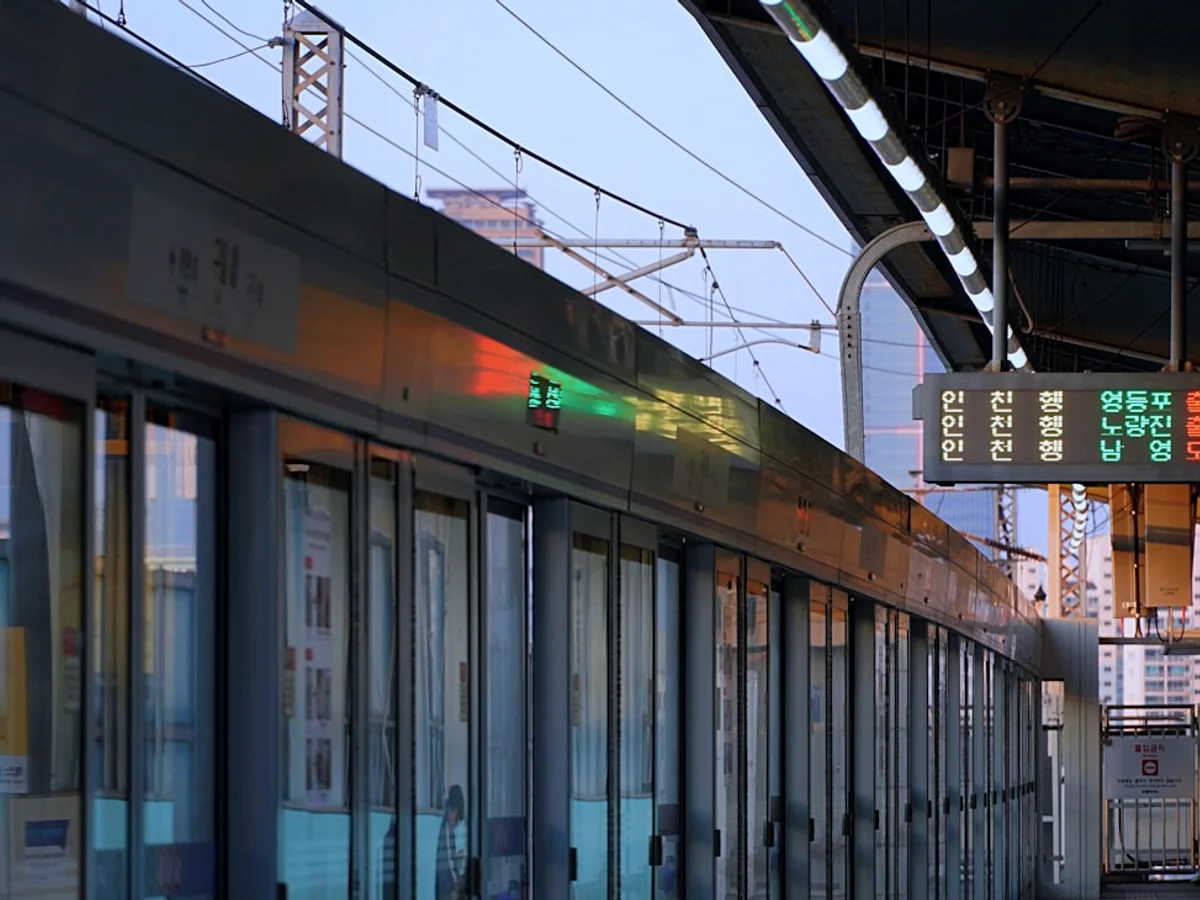
- Check the screen: Large LED boards show the “Track Number” about 10-15 minutes before departure.
- Find your car number: There are markers on the floor and the doors.
- Luggage storage: There are racks at the end of each car for big suitcases.
- Silent Mode: Put your phone on vibrate the second you sit down.
Food and Snacks on Board
Gone are the days of the “trolley lady” walking down the aisle with snacks—sadly, that mostly ended with COVID. Now, you here have to buy your food at the station before you board. There are vending machines for water and small snacks like Pringles, but for a real meal, grab a Dosirak (lunch box) at the station. I often get the one with bulgogi and several side dishes for about 10,000 won. Eating a meal while watching the Korean countryside fly by at 300 km/h? It’s one of those small travel joys that you’ll actually remember. it’s just a very “civilized” way to travel, and no one is shouting, the train doesn’t jolt, and the windows are always clean. Just remember to keep your voice down and enjoy the ride. 뭐랄까 (mwo-ral-kka)… Fun fact: if you follow these steps, you’ll be navigating the tracks like a local in no time.