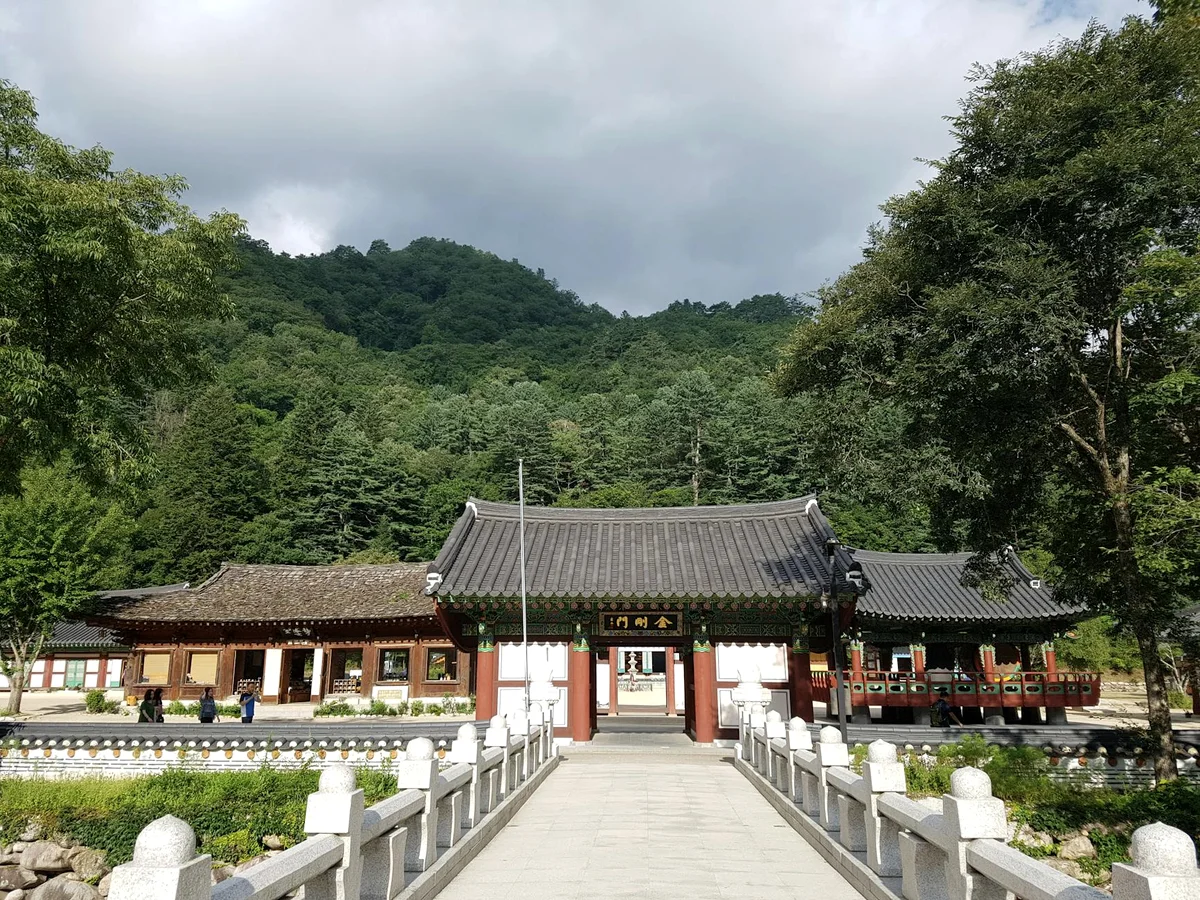
Understanding Discovering Bulguksa Temple and Seokguram Grotto in Gyeongju
Sitting high up on Tohamsan Mountain, Bulguksa serves as the earthly temple complex. These two sites are effectively the soul of Gyeongju, representing the absolute peak of Silla architecture and Buddhist art. The Seokguram Grotto protects the nation looking out toward the East Sea. It’s the kind of place that justifies the travel hype.
The Vibe at Bulguksa
I still remember the first time I saw the stone staircases leading up to the main hall. They aren’t just functional; they represent the bridge between the secular world and the Buddha’s land. The detail is insane. You’ll see two famous pagodas standing in the courtyard—Dabo-tap (the complex one) and Seokga-tap (the simple one)—and honestly, staring at them for ten minutes made me realize how advanced the Silla craftsmen were back in the 8th century. The air always smells like a mix of old wood and incense here, which really grounds you. If you go in autumn, the red maple leaves against the painted eaves are just… wow.
- Entrance Fee: Adults pay 6,000 won (worth every penny).
- Best Time: Arrive right at 8:00 AM to avoid the tour bus crowds.
- Photo Spot: The bridge over the lotus pond near the entrance is iconic.
The Trek to Seokguram
Getting to the grotto is a whole other experience. You can hike, but most people take the shuttle bus from the temple parking lot. Let me tell you, that winding road is not for the faint of heart—if you get motion sickness, sit near the front. Inside the grotto, the Buddha statue faces the sunrise. I was actually a bit disappointed that you view it through a glass wall now—it feels a bit detached—but the serenity is still there. When I went, it was dead silent except for the wind rustling through the trees. It’s spiritual even if you aren’t religious.
- Take Bus No. 12 from the Bulguksa parking lot (runs every hour).
- The ride takes about 20 minutes up the mountain.
- From the drop-off, it’s an easy 10-15 minute walk along a dirt trail to the entrance.
Why It Hits Different
There’s a reason locals come here just to sit and think. It’s not just a museum piece; it’s an active place of worship. You’ll see monks walking around and people bowing. One thing that surprised me was the “Sarang-namu” (Love Tree) near the entrance—two trees that grew into one. It’s a small detail, but it adds to the charm. The only downside? The stairs. There are a lot of them, so wear comfortable shoes or your knees will hate you by noon.
Why is Discovering Bulguksa Temple and Seokguram Grotto in Gyeongju significant?
Honestly, visiting these sites isn’t just about ticking off a UNESCO list; it’s about standing in the physical manifestation of a Buddhist utopia that the Silla people actually tried to build on Earth. It’s the sheer ambition of it—carving enlightenment out of granite in the 8th century—that leaves you feeling kind of small, in a good way. I’d definitely recommend checking this out.
More Than Just Stone and Wood
When I first walked through the misty entrance of Bulguksa early in the morning—around 7:30 AM to beat the tour buses—I wasn’t just looking at a temple. I was looking at Kim Dae-seong’s life work. Legend says he built Bulguksa for his current parents and Seokguram for his parents from a past life. That kind of devotion hits you differently when you see the intricate stonework of the Dabo-tap and Seokga-tap pagodas. Most people just snap a photo and move on, but if you actually stop and look at the interlocking stones of the Cheongun-gyo (Blue Cloud Bridge), you realize they built this without modern cement. It’s just gravity and genius holding it together for over a thousand years.
- Architectural Harmony: The layout represents the Buddha land, perfectly balanced between terrestrial and celestial worlds.
- Resilience: What you see is a survivor. The wooden structures were burned down during the Imjin War (1592) and painstakingly restored.
- Artistic Peak: Silla artistry didn’t just copy China; it created a unique, softer aesthetic that you can feel in the curves of the roof tiles.
A Living Breathing Space
It’s weird, but my favorite memory isn’t the Buddha statue itself. It was watching a group of Korean grandmothers in colorful hiking gear—seriously, neon pink and green everywhere—bowing in perfect unison near the main hall. To us, it’s a “site,” but to them, it’s still an active spiritual engine. The smell of incense mixed with the pine forest air is something that stays with you long after you leave. This place is basically the field trip capital of Korea. If you go in spring or autumn, expect a sea of yellow uniforms. It gets loud. Weekday afternoons are less crowded. Like, really loud. But there’s something charming about hearing kids laughing in a place meant for silent contemplation. Here’s the thing: it reminds you that history isn’t dead here.
- Rite of Passage: Almost every South Korean visits here on a school trip, making it a shared cultural memory.
- Hiking Hub: The trail up Mt. Tohamsan connects the two sites (about a 45-minute hike), linking physical effort with spiritual reward.
- National Pride: These sites are often cited as the pinnacle of Korean cultural achievement.
The Honest Truth About Seokguram
Okay, I have to be honest about Seokguram Grotto. The walk up—or the winding bus ride on Bus No. 12—is gorgeous, with air so crisp it almost hurts your lungs. But the grotto itself? It’s behind a glass wall now for preservation. You can’t walk around the Buddha like they used to in the old days. That was a bit of a letdown for me personally. I really wanted to see the ten disciples carved into the rotunda wall up close, not through a glare and a crowd of people. What surprised me was the geometry of the dome is mathematically perfect, built to look like the sky. But—and this is a big but—when you catch the Buddha’s face looking out toward the East Sea, none of that matters. It’s the only artificial grotto in the world made by assembling granite blocks rather than digging into a mountain.
- Admission: It requires a separate ticket, usually around 6,000 KRW (adults).
- Best Time: Sunrise is legendary, but you need to be there by 5:00 AM or earlier depending on the season.
- Photography: Strictly forbidden inside the grotto (and they’re strict about it).
Where can you find Discovering Bulguksa Temple and Seokguram Grotto in Gyeongju?
You’ll find these two UNESCO World Heritage sites nestled on the slopes of Tohamsan Mountain, roughly a 40-minute bus ride southeast of Gyeongju’s city center. What stood out was while they are distinct locations—Bulguksa at the base and Seokguram near the summit—they are spiritually connected by a winding mountain road and a scenic hiking trail.
The Route Less Traveled
Most guidebooks tell you to just hop on Bus 10 or 11 to get to the Bulguksa stop, but honestly? That’s the amateur move if you want the full experience. The bus is fine—cheap, like 1,700 won—but it’s usually packed with hikers in colorful gear shouting over each other. When I visited last spring, I decided to skip the shuttle bus between the temple and the grotto and hiked the trail instead. It was pretty about 3:30 PM, and the light was hitting the leaves in this golden, hazy way that photos just can’t capture. The air smelled like wet pine and dust, totally different from the diesel fumes at the parking lot.
- Bus 12: Takes you from Bulguksa parking lot up to Seokguram (runs every hour, at 40 minutes past).
- The Hiking Trail: A 2.2km walk, takes about one hour. Steep but quiet.
- Taxi: Fast but will set you back about 20,000 won from the terminal.
Finding Your Quiet Corner
The main courtyard of Bulguksa with the two pagodas? It’s iconic, sure, but it’s also a zoo. You can barely hear yourself think with all the tour guides amplifying their voices. Personally, I found the real charm around the Gwaneumjeon Hall at the very top of the complex. You have to climb some seriously steep stairs to get there—my calves were burning—but the view looking down over the tiled roofs is worth it. It’s quieter up there. You can actually smell the incense and old wood instead of someone’s perfume.
- Sarira Stupa Area: Go left past the main hall; almost no one goes here.
- The Back Garden: Behind the museum area, great for autumn colors.
- Seokguram Sunrise: If you can wake up at 4 AM, the view of the sun coming up over the East Sea is legendary. The glass wall at Seokguram. One thing that kinda sucked though? One local explained that i get it, preservation and all, but standing there pressed against the glass with fifty other people felt a bit… Take the second alley on the left. sterile, but i missed the connection i felt at smaller, less famous temples. But hey, looking into the stone Buddha’s eyes, even through glass, still gave me goosebumps. Entry was around $15.
When to experience Discovering Bulguksa Temple and Seokguram Grotto in Gyeongju
But honestly? From personal experience, the specific month matters less than the time of day—get there at 7:00 AM sharp to avoid the tour buses, or you’ll be fighting for elbow room instead of finding inner peace. If you want the absolute best scenery, aim for early April for cherry blossoms or late October for the fiery autumn foliage. Weekday afternoons are less crowded.
The Seasonal Sweet Spots
I still remember my first trip during autumn. I stepped off the bus—the number 10 or 11, I think—and was immediately hit by this incredible sea of red and orange maples. It was stunning, sure, but also chaotic. What stood out was you know how it is with famous spots; everyone wants that perfect photo. Spring is just as intense. The cherry blossom tunnel leading up to the temple entrance is legendary, but you have to be willing to share it.
- Spring (early April): The pink petals raining down are surreal, but expect peak domestic tourism crowds.
- Autumn (mid-October to early November): The contrast of the red leaves against the vibrant dancheong (traditional painting) of the eaves is a photographer’s dream.
- Winter: Honestly, it’s brutally cold and the wind cuts right through you. But seeing the temple dusted in white snow with zero crowds? Magical. I’d pick this over the sweaty summer humidity any day.
Beating the “Conveyor Belt”
Here’s the thing about Seokguram Grotto specifically—it’s small, and like, really intimate. When I went around 2 PM, I felt like I was on a factory line, just shuffling past the glass viewing wall without a moment to actually breathe or look at the Buddha properly. Not gonna lie, i regret not dragging myself out of bed earlier. I’d pick this over other options any day. The view from there was actually stunning. The vibe changes completely if you go early. If you can manage it, take the first bus from the terminal around 6:00 AM. You’ll get that crisp, misty mountain air and, more importantly, silence. It changes the experience from a “tourist attraction” to an actual “spiritual site.” You can actually hear the chanting monks instead of a tour guide’s megaphone.
A Special Time to Visit
If your dates align with Buddha’s Birthday ( in May based on the lunar calendar), you are in for a treat. The temple grounds are strung with thousands of colorful paper lanterns, each with a wish tag attached. I walked through there at dusk once, and the glow against the twilight sky was… well, hard to describe — just peaceful. I’d say
- Check the dates: It varies every year, so Google “Buddha’s Birthday Korea [Year]” before booking.
- Go twice: Visit during the day to see the temple, then grab dinner nearby (try the sanchae bibimbap, here 12,000 won), and head back in for the night view.
- Respect the space: It’s a festive time, but people are still praying.
How to enjoy Discovering Bulguksa Temple and Seokguram Grotto in Gyeongju
Here’s the thing: it’s about getting there early—like, 8:00 AM early—before the massive tour buses roll in from Busan. To really get the vibe of these places, you can’t just hop off the bus, snap a picture, and leave. That quiet, misty walk up the mountain path is honestly half the experience, giving you a moment to breathe before you hit the crowds. Entry was around $15.
The Art of Slowing Down
There’s this concept in Korean temples called walking meditation, even if you aren’t trying to be spiritual. When I first visited Seokguram, the fog was so thick I couldn’t see ten feet in front of me, and the only sound was the crunch of gravel under my boots and the distant chanting of a monk. It felt… heavy, but in a good way. You’ll notice locals don’t rush. They often clasp their hands or bow slightly at the gates. You don’t have to do this, obviously, but slowing down helps you notice the details, like the faded “Dancheong” (traditional coloring) under the eaves that most people walk right past.
- Keep your voice down: It’s an active monastery, not just a museum.
- Watch your step: The stone thresholds at doorways are meant to be stepped over, not on.
- Look for the lotus lanterns: You can write a wish on a roof tile or lantern for a donation ( around 10,000 won).
Modern Conveniences vs. Ancient Vibes
One thing that surprised me? The vending machines right next to 1,200-year-old stone pagodas. It’s a bit jarring at first, seeing a bright blue Powerade bottle in such a sacred space, but hey, hydration matters when you’re trekking up a mountain. Getting between Bulguksa and Seokguram used to be a serious hike, but now most people just take the Number 12 Bus. It leaves every hour (here at 40 minutes past the hour) from the parking lot. Real talk: the winding road is scenic enough, and unless you’re a hardcore hiker, you’ll want to save your energy for the Grotto itself. Just remember that the ride is curvy—if you get motion sickness, sit near the front. Honestly, take the bus.
- Check the return schedule immediately upon arrival; missing the last bus means a long walk or an expensive taxi.
- Bring cash (1,700 won or a T-money card) for the ride; drivers don’t take credit cards.
- Don’t expect air conditioning inside the Grotto viewing area—it’s climate-controlled for the stone, not the humans.
Facing the Buddha
Okay, real talk: viewing Seokguram can be a bit underwhelming if you’re expecting to walk right up to the Buddha and touch the stone. You have to view it through a thick glass wall now to protect the granite from humidity and carbon dioxide. I remember pressing my face against the glass, trying to catch the eyes of the statue, feeling a bit disappointed at the barrier. But then you stand there for a minute. The face is… serene in a way that photos just don’t capture. The air up there feels thinner, colder. You can’t take photos inside—the guards are strictly enforcing this—so put the phone away and just look. It forces you to actually commit the image to memory, which is probably better anyway.